Gemini 4 Argon completes one business task in two: what that changes for an e-commerce team
 Alexandre Suon·5 min read·
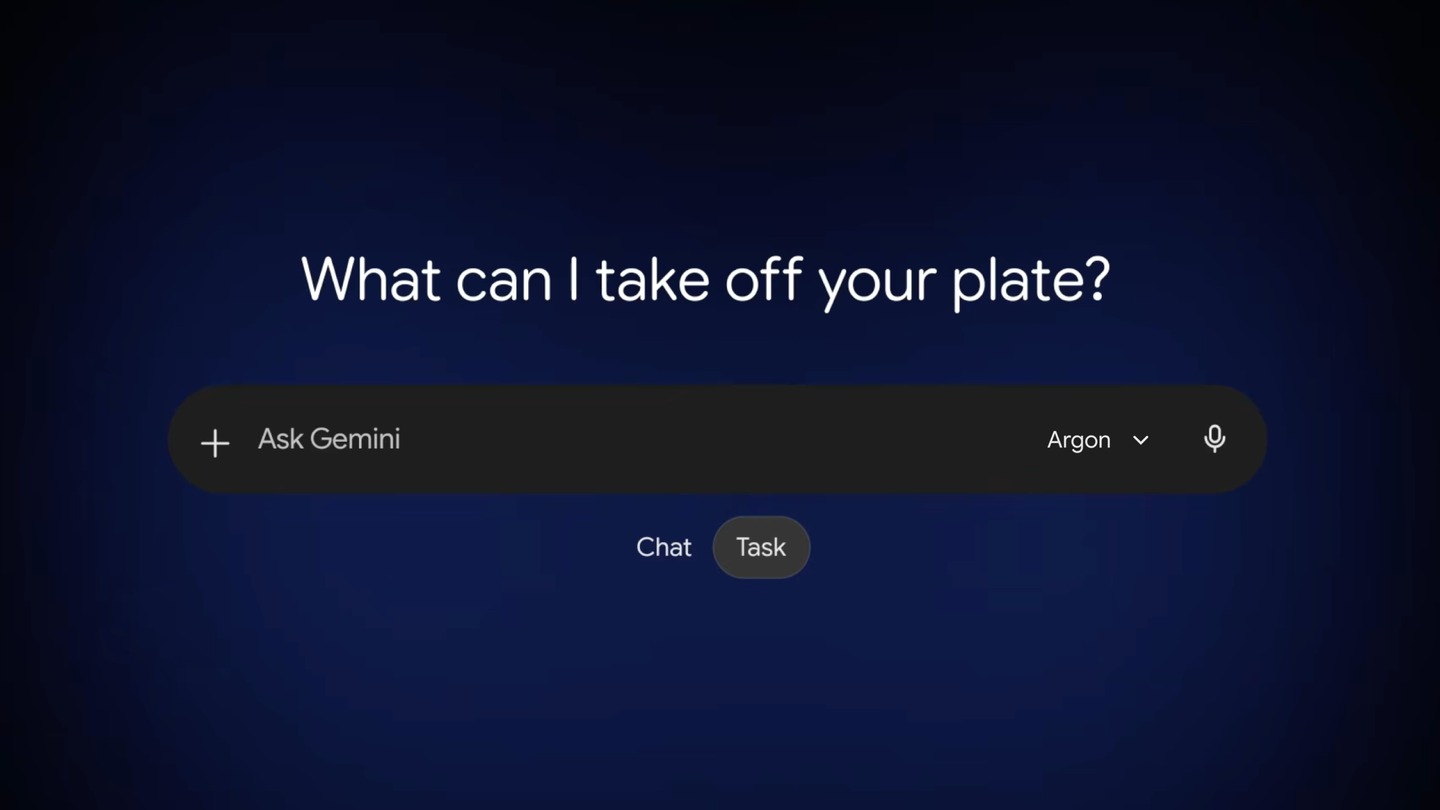
Google's new model scores 51.3% on AutomationBench, Zapier's end-to-end business task test (a figure published by Google). What the test measures, what “one task in two” means for reporting or product pages, and how to organize the review of the other half.
In this articleShow all sectionsHide
30-second summary
ShowHide ⌄
- Google introduced Gemini 4 Argon on September 30, 2026, then opened it to businesses on October 13, on Google Cloud and in the Gemini app.
- According to Google, Argon ranks first on AutomationBench, Zapier's test of complete business tasks, with 51.3% of tasks completed.
- AutomationBench checks whether the right records were updated and the right messages sent. Each task is a pass or a fail.
- For an e-commerce team, one task in two done unaided already saves a lot of time on reporting, product pages or analyses.
- It is also one task in two to fix. A review step, with a measured error rate, remains essential.
Section 1 · The news
Google ships Argon, a model built for work inside companies
On September 30, 2026, Google introduced Gemini 4 Argon, its new AI model. Google aims it at three uses: software development, skilled office work (legal, finance, document analysis) and cybersecurity. On October 13, the model became available to businesses on Google Cloud and in Gemini for business, and to Google AI Pro and Ultra subscribers in the Gemini app.
Google highlights two numbers. On DeepSWE, a software development test on long projects, Argon scores 77.9%. On AutomationBench, Zapier's business task test, it scores 51.3% and ranks first. These figures are published by Google itself and have not been measured independently.
| Item | Announced value |
|---|---|
| AutomationBench (Zapier, business tasks) | 51.3%, ranked #1 |
| DeepSWE v1.1 (software development) | 77.9% |
| Maximum response length | 1 million tokens (up from 64,000) |
| Introductory price (until Nov. 30, 2026) | $2 input, $10 output, per million tokens |
| Price afterwards | $4 input, $20 output, per million tokens |
What is a token? AI models cut text into small pieces called tokens, roughly a word or part of a word. Pricing is based on tokens read (input) and tokens written (output). A one-million-token output limit means the model can produce a very long document in one go, for example hundreds of product pages.
Section 2 · The test
AutomationBench judges each task by its end result
A benchmark is a standard test, the same for every model, used to compare them. Most benchmarks ask questions and grade the answers. AutomationBench, published by Zapier in April 2026, works differently: it gives the model a real office task to carry out from start to finish.
The model works in an environment that mimics a company's tools: a CRM, an inbox, a calendar, Slack messages. Tasks cover six functions: sales, marketing, operations, support, finance and HR. The model has to chain several actions across several tools, and an early mistake often breaks everything after it.
At the end, Zapier checks the state of the tools. In its own words: either the right records were updated and the right messages were sent, or they weren't. There is no partial credit and no AI grading the answer. Zapier sums up the idea as a benchmark for outcomes, not output.
Why 51.3% is a high score On a test where each task is passed or failed as a whole, one wrong step loses the whole point. Completing more than one task in two across multi-tool sequences, unaided, is a level models did not reach until recently. The score is still a test score: it does not tell you how many of your own tasks the model would get right.
Section 3 · For e-commerce
One task in two already goes a long way for reporting and product pages
An e-commerce team spends much of its time on repetitive tasks that look a lot like AutomationBench: pulling numbers from several tools, formatting them, writing, updating a page, notifying someone. Three concrete examples:
- The weekly report. Pull sales, traffic and campaign data, build the table, write the commentary and send it to management.
- Product pages. Write or enrich hundreds of pages from supplier data, in the brand's voice, then update them in the catalog.
- One-off analyses. Work out why conversion dropped in a category, cross-check sources, suggest leads.
If a model carries half of these tasks through to the end on its own, the time saved is real. But the number reads both ways. Out of a hundred product pages, half may come out right and the other half contain a mistake: a wrong size, an invented material, a mistyped price. And nothing tells you in advance which is which.
“One task in two done unaided is also one task in two you need to be able to catch.”
Section 4 · Review
Review becomes a step in the process, with a measured error rate
Checking things case by case, when there is time, is not enough. The better approach treats review as a step in its own right, with clear rules and one number tracked over time: the error rate, meaning the share of the model's output that has to be corrected.
- 1Define what counts as an errorWrite the list: wrong figure, invented information, off-brand tone, missing field. Separate serious errors (price, composition, promises) from minor ones.
- 2Review everything at firstFor the first few weeks, every output goes through a person. Each error found is logged, by type.
- 3Calculate the error rateNumber of corrected outputs divided by the total, per task type. Reporting and product pages will not have the same rate.
- 4Move to sample checksOnce the rate is low and stable on a task, switch to checking a sample. Keep full review on anything touching price or legal content.
- One review owner per task type, named in advance.
- A shared error grid, so two reviewers score the same way.
- An error rate tracked weekly, per task, with a threshold above which you go back to full review.
- A comparison with human work on the same tasks: people make mistakes too, and that is the right baseline.
Key terms
ShowHide ⌄
- Benchmark
- A standard test, identical for every model, used to compare them.
- AutomationBench
- Zapier's benchmark that measures whether a model can complete whole business tasks on its own, across several tools. Each task is a pass or a fail.
- Token
- A small piece of text, roughly a word or part of a word. AI models are billed by the number of tokens read and written.
- End-to-end task
- A task carried out from start to finish with no human step: finding the information, acting in the tools, delivering the result.
- Error rate
- The share of a model's output that a person has to correct, measured per task type.
- Sample check
- Reviewing only a random share of the output, once the error rate is known and stable.
Sources
ShowHide ⌄
Alexandre co-founded and runs Henkan & Partners. He decodes one e-commerce story every day on LinkedIn.
Follow Alexandre ↗