Shopify plugs checkout into Gemini and AI Mode: sales your analytics will not see
 Alexandre Suon·10 min read·
For eligible US Shopify merchants, customers can now buy inside Gemini or AI Mode without visiting the store. How it works, what GA4 and your pixels stop seeing, and how to bring those sales back into your numbers.
In this articleShow all sectionsHide
30-second summary
ShowHide ⌄
- For eligible US Shopify merchants, direct checkout in Google AI Mode and the Gemini app is on by default. The rollout picked up in September 2026.
- The customer chooses, pays and gets a confirmation without ever loading a page of the merchant's site.
- Shopify states it plainly: Google Analytics and custom pixels do not fire in this checkout. Only two server events are sent.
- Upsells, custom fields, loyalty programs and subscriptions can drop out of this flow. The customer pays with the methods saved in Google Pay.
- What to prepare: server-side tracking, a flawless product feed, regular reconciliation between Shopify and analytics, and tests of what the agent reads.
Section 1 · The news
The “Buy” button in Gemini now leads to payment, not to your site
Until now, a shopper who found a product in Google AI Mode (the conversational mode of Google Search) or in the Gemini app would click, then land on the merchant's site to pay. For eligible US Shopify merchants, that detour is gone. The shopper clicks Buy, enters shipping and payment details, then confirms, without leaving Google.
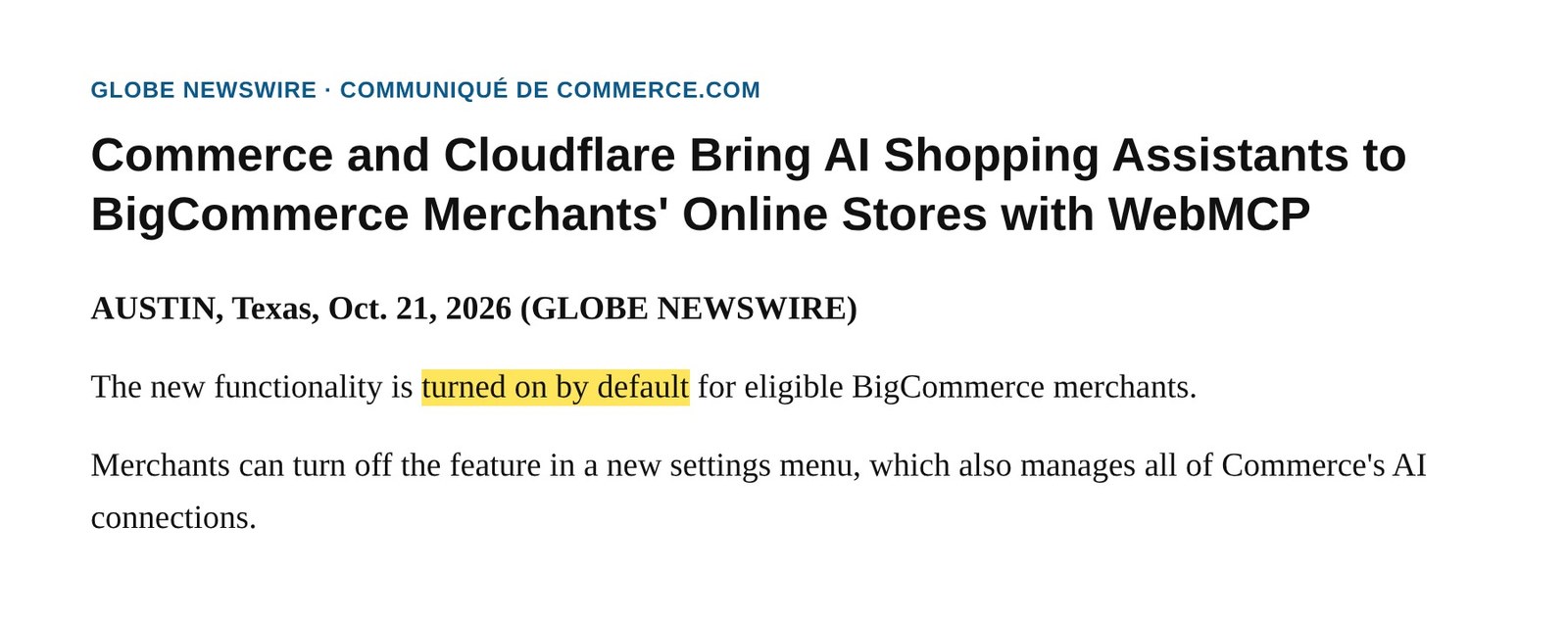
The part that caught merchants' attention: it is on by default. Shopify's documentation says direct checkout is active for eligible stores. In September 2026, merchants received an email from Google telling them their Shopify store had been matched to their Merchant Center account, which enabled this checkout, with no action on their side.
To be eligible, a store must be based in the United States and sell to US customers, have a valid Google Merchant Center account with its products synced, and have its terms of service, privacy policy and return policy filled in. Shoppers outside the US are sent to the merchant's site instead.
How do you turn it off? In the Shopify admin: Sales channels, then Agentic. Turn off “Allow Shopify to manage for me”, open Google AI Mode and Gemini, turn off “Direct checkout” and save. Your products stay visible in Google, but shoppers are sent to your site to pay.
Section 2 · How it works
A shared protocol, UCP, lets Google place orders with you
Behind that button sits the Universal Commerce Protocol (UCP). Google launched it on January 11, 2026, co-developed with Shopify, Etsy, Wayfair, Target and Walmart, and endorsed by more than 20 other companies including Adyen, Stripe, Visa, Mastercard and Zalando. It is an open standard: a common language that lets an AI agent browse a catalog, build a cart and place an order with a merchant.
UCP in one picture Think of a standard power socket. Without a standard, every AI agent (Gemini, Copilot, ChatGPT) would need a custom connection to every store. With UCP, the merchant exposes its “capabilities” once: catalog, checkout, discounts, order tracking. Any compatible agent can then plug in. Shopify built that connection for all of its merchants.
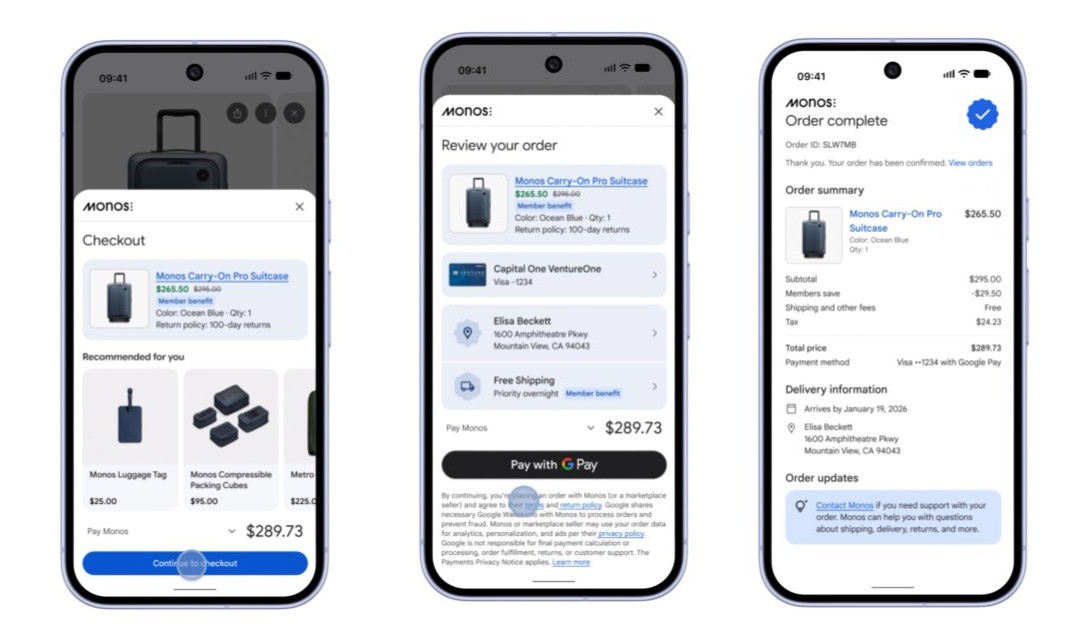
- 1The conversationThe shopper asks a question (“a lightweight carry-on for an upcoming trip”) and Gemini suggests products from merchants' catalogs.
- 2CheckoutThe shopper picks a product. A checkout screen opens inside Gemini, in the brand's colors, with price, color and return policy.
- 3Review with Google PayCard, address and shipping are prefilled from Google Wallet. The shopper checks and pays.
- 4ConfirmationGoogle shows the order number and delivery date. The order reaches the merchant, who stays the official seller.
The merchant remains the merchant of record: it takes the payment, ships, handles returns and keeps the customer relationship. Shopify says there are no extra fees beyond standard payment processing. Yet none of these screens is a page of the merchant's site.
Section 3 · Measurement
GA4 and your pixels do not see these purchases
Most sites record a purchase the same way: a small script, loaded in the shopper's browser, fires on the order confirmation page. That is how GA4, the Meta pixel and the TikTok pixel work. This is called client-side measurement.
In a Gemini purchase, that page does not exist on your domain, so your script never loads. Shopify's documentation is explicit: Google Analytics and custom pixels do not fire in this checkout. Only two server-to-server events are sent: checkout started and checkout completed.
| Signal | Purchase on your site | Purchase in Gemini or AI Mode |
|---|---|---|
| Order in the Shopify admin | Yes | Yes |
| GA4 purchase (site tag) | Yes | No |
| Meta, TikTok and custom pixels | Yes | No |
| Shopify server events | Yes | Yes: checkout started and completed |
| Funnel steps (shipping, payment) | Yes | No |
| Session and traffic source | Yes | No: there is no visit |
The direct result: revenue in GA4 will drop compared with Shopify, while your sales do not. Conversion rate can move too: a shopper who discovered the product on your site and then bought it in Gemini counts as a visit with no purchase. And your ad campaigns, which optimize on purchases reported by pixels, receive fewer signals.
Server-side tracking Instead of relying on the shopper's browser, your server (or Shopify's) sends the “order placed” information straight to GA4 and ad platforms. For GA4, that goes through the Measurement Protocol. For Meta, through the Conversions API. These calls do not depend on a page view: they go out as soon as the order exists, wherever it came from.
“A sale that skips your site also skips your tags.”
Section 4 · Checkout
Your upsells, custom fields and payment methods do not come along
A Shopify checkout is often enriched: an extra product offered before payment, a gift message field, a loyalty block, an email consent box. In Gemini and AI Mode, many of these additions do not show. Shopify lists what may be missing:
- Checkout blocks: custom fields, upsells, add-ons, surcharges, loyalty programs, address autocomplete, consent collection, chat.
- Some products: subscriptions, bundles, customizable products, B2B-only products.
- Some delivery methods: local delivery, store pickup, pickup points.
- Customer accounts: you cannot require sign-in before checkout.
- Apps that show information or collect input at checkout may not work.
What remains: Shopify Functions for shipping, discounts and cart validation, plus automatic discounts and discount codes. On payment, the shopper uses the card saved in their Google account: Google talks about paying with Google Pay, Shopify about credit or debit cards. Your other payment methods (in-house installments, gift cards, PayPal) are not offered. Google has said PayPal is coming “soon”.
Look at the first screen in the image Under the product, a “Recommended for you” block suggests a luggage tag and packing cubes. Google displays those recommendations, in its own interface. Cross-selling still exists, but it no longer runs through the upsell app installed on your checkout.
Section 5 · Reconciliation
Shopify becomes the reference, your analytics has to tie back to it
Orders placed in Gemini do show up in the Shopify admin, with channel or referrer attribution. Under Sales channels, then Agentic, Shopify also provides a report per AI channel (sales, orders) and a “Total sales” report in the Explore section. Note that these sales add up purchases made directly in the channel and purchases made on your site after a click from that channel.
The principle is simple: the Shopify back office is the source of truth for revenue, and analytics is there to understand behavior. The gap between the two should be known, explained and tracked every week.
- 1Export Shopify ordersOver a fixed period, with order number, amount, sales channel and referrer.
- 2Export GA4 purchasesOver the same period, with the transaction ID (transaction_id). That is the key linking the two sources.
- 3Match by order numberOrders found in Shopify but missing from GA4 are your gap. Sort them by channel: Gemini and AI Mode, other agents, cookie refusals, ad blockers.
- 4Track the gap over timeA stable gap can be explained. A gap that grows fast signals a new channel that sells without being measured.
Why the transaction ID matters If you also send orders to GA4 from the server, you risk counting on-site purchases twice (once through the tag, once through the server). GA4 deduplicates purchases that share the same transaction_id. So use the Shopify order number as the ID everywhere.
Section 6 · The plan
Get measurement ready before the channel grows
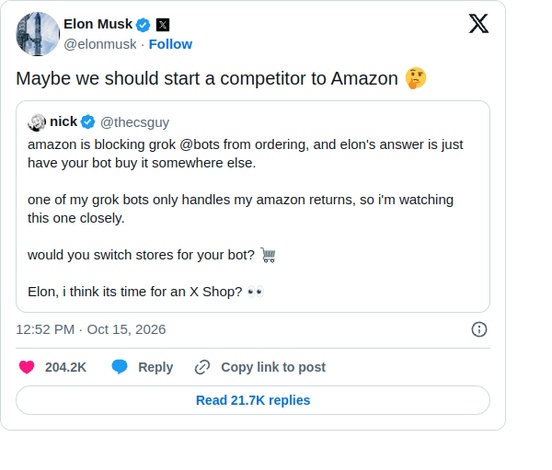
For now, only eligible US merchants are affected. In May 2026, Google announced that UCP-powered checkout would roll out in Canada and Australia “in the coming months”, and later in the UK. No date has been given for continental Europe. This is the right time to prepare, without rushing.
- Move conversions server-side: GA4 through the Measurement Protocol, Google Ads, Meta and TikTok through their conversions APIs, with the order number as the ID.
- Make the product feed flawless in Merchant Center: titles, variants, stock, prices, shipping costs, return policy. This is what the agent reads and shows the shopper.
- Test what the agent reads: ask Gemini your customers' questions and compare its answers with your product pages. Shopify asks merchants to place required legal disclosures within the first 6,000 characters of the description.
- List what lives in your checkout: upsells, loyalty, consents, gift fields. Decide what you accept to lose on this channel.
- Set up a weekly reconciliation of Shopify against analytics, with the gap tracked by channel.
- Make an informed call on keeping or turning off direct checkout, channel by channel.
“When this channel reaches Europe, you will need to know how to measure it already.”
Key terms
ShowHide ⌄
- UCP (Universal Commerce Protocol)
- An open standard launched by Google with Shopify and others, letting an AI agent browse a catalog and place an order with a merchant.
- Direct checkout
- Payment completed inside the AI interface (Gemini, AI Mode, Copilot), without going through the merchant's site.
- Merchant of record
- The official seller in the transaction: it takes payment, ships, handles returns and owns the customer relationship. Here, the merchant.
- Client-side measurement
- Measurement done by a script loaded in the visitor's browser, such as the GA4 tag or the Meta pixel.
- Server-side tracking
- Sending conversions from a server straight to the analytics tool or ad platform, without depending on a page view.
- Measurement Protocol
- A GA4 interface for sending events, such as a purchase, from a server.
- Google Merchant Center
- Google's tool where merchants upload their product catalog. It is the source AI Mode and Gemini rely on.
Sources
ShowHide ⌄
- Shopify Help Center, “Google AI Mode and Gemini” (Agentic Storefronts), accessed October 21, 2026
- Shopify Help Center, agentic channel reports (Agentic home)
- Shopify, “The agentic commerce platform: Shopify connects any merchant to every AI conversation”, January 11, 2026
- Google, “New tech and tools for retailers to succeed in an agentic shopping era”, January 11, 2026
- Google Developers Blog, “Under the Hood: Universal Commerce Protocol (UCP)”, January 11, 2026
- Google, “How we're helping retailers thrive with new Universal Commerce Protocol features and AI tools on Google”, May 20, 2026
- Google for Developers, UCP “Native checkout” guide
- PPC Land, “Google switched on AI Mode checkout for Shopify stores without asking”, September 23, 2026 (secondary source)
Alexandre co-founded and runs Henkan & Partners. He decodes one e-commerce story every day on LinkedIn.
Follow Alexandre ↗