AI traffic converts 80% better, says Shopify: why the product page becomes the front door
 Alexandre Suon·9 min read·

On its data from April to June 2026, Shopify finds that visits sent by AI assistants convert 80% better than classic search. What that says about the AI visitor, what GEO is, and how to find this traffic in your own numbers.
In this articleShow all sectionsHide
30-second summary
ShowHide ⌄
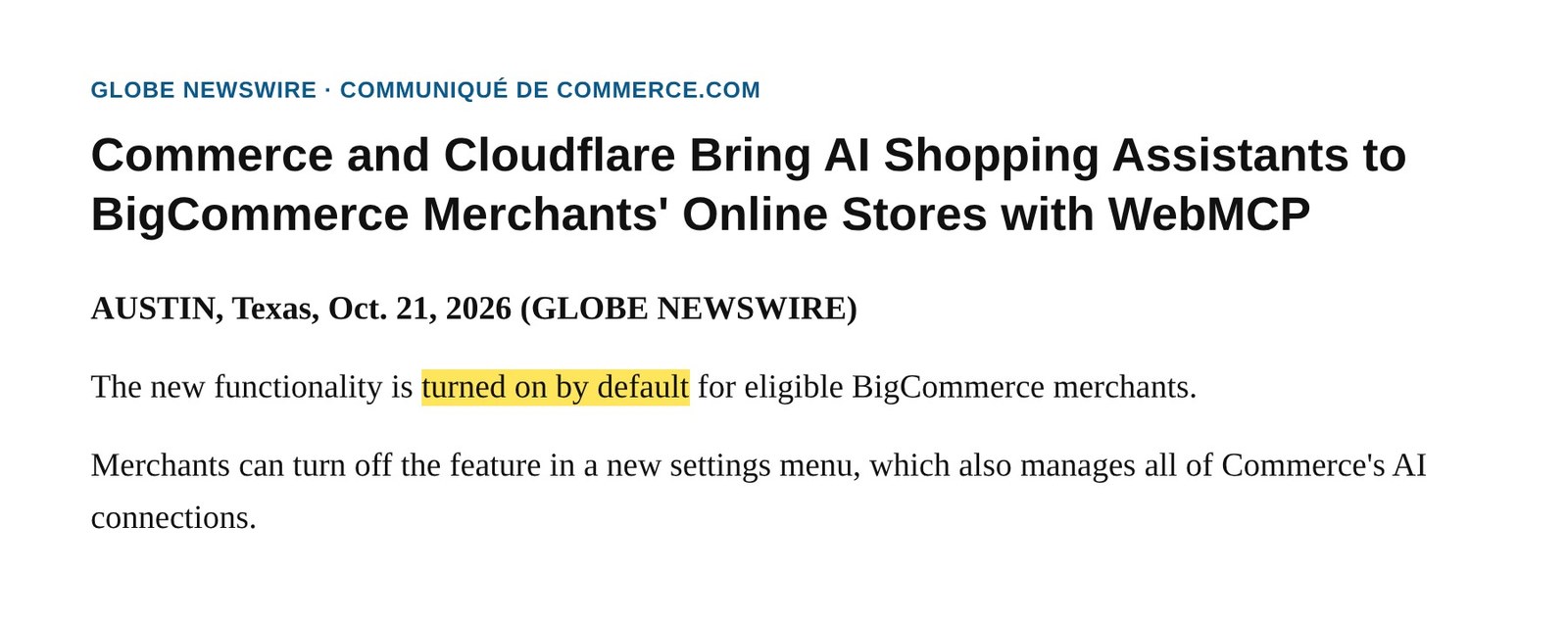
- In its report “The Entrepreneur Effect”, published in October 2026, Shopify finds that visits sent by AI assistants convert 80% better than organic search.
- Over the same period (April to June 2026), these orders have a 14% higher average order value, and AI brings in nearly twice as many first-time customers as other channels.
- The AI visitor arrives after comparing, often straight onto a product page. That page has to close the sale.
- Being cited by AI assistants (GEO) becomes a revenue topic, beyond simple visibility.
- These figures come from one platform, over one quarter. The measurement that matters is yours, and you can run it with the tools you already have.
Section 1 · The report
Shopify measures AI traffic that converts 80% better
In mid-October 2026, Shopify published “The Entrepreneur Effect”, a report on the economic weight of the merchants who sell on its platform. Among the figures on jobs and new businesses, one part covers traffic sent by AI assistants such as ChatGPT or Perplexity.
For the period from April to June 2026, Shopify writes that AI-referred sessions convert 80% better than organic search. Orders from these visits have a 14% higher average order value. And AI channels bring in nearly twice as many first-time customers as other channels.
Shopify adds two points. Traffic from AI tripled year over year across Shopify stores. And 75% of sales from these visits came from stores selling products outside the 100 most common categories: AI assistants also recommend niche brands.
What does “converts 80% better” mean? The conversion rate is the share of visits that end in an order. “80% better” is a relative gap. If 2 out of 100 visits from Google buy, then about 3.6 out of 100 visits from an AI buy. The rate itself stays low; only the gap is 80%.
Section 2 · The AI visitor
The AI visitor arrives having already compared
To understand these numbers, look at the journey. On Google, a shopper types a few words, opens several sites and compares on their own. With an AI assistant, they describe the need in detail (“an unscented moisturizer for sensitive skin, under 30 euros”), ask questions and rule options out. By the time they click, they have already done the sorting.
Shopify puts it this way: these “motivated, post-research buyers are more likely to purchase.” The practical consequence is simple. This visitor often lands straight on the page of the recommended product, skipping the home page and the category pages.
- 1Classic searchShort query, results page, home or category page, then comparing several products on the site.
- 2AI assistantNeed described in detail, comparison done inside the conversation, then a link to one specific product.
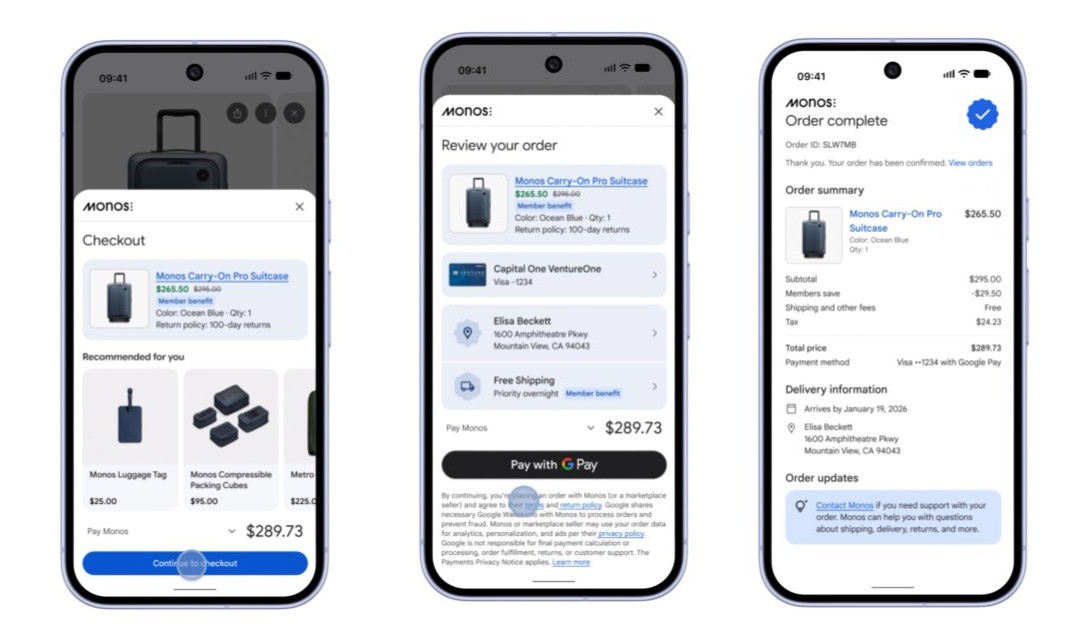
- 3Landing on the siteThe AI visitor lands on the product page. In a few seconds, it has to confirm what the AI promised: price, availability, delivery, reviews.
“Your warmest customers no longer go through your home page.”
Section 3 · GEO
Being cited by AI assistants becomes a revenue topic
GEO, for Generative Engine Optimization, covers what a brand does to be cited and recommended in the answers of AI assistants. It is the cousin of SEO, which aims to rank higher in Google's results.
Until now, GEO was often treated as a brand-image topic: “does ChatGPT talk about us?” Shopify's numbers bring it closer to revenue. If this traffic converts better and brings more new customers, every recommendation lost to a competitor costs sales.
How an AI picks the products it cites An AI assistant relies on what it can read and check: the site's pages, product data (price, stock, features), reviews, and what other sites say about the brand. A clear, complete product page therefore works twice: it helps the AI recommend the product, then it helps the visitor buy it.
That is where the product page changes role. It becomes both the source the AI reads and the conversion point for the visitor the AI sends. A vague page, with no clear price, delivery time or reviews, loses on both counts.
Section 4 · In your tools
AI traffic shows up through its referrer and its UTMs
Good news: this traffic is already in your analytics tools. It is simply mixed in with other sources. Two clues help you spot it.
- The referrer. This is the address of the site the visitor came from. A visit from ChatGPT shows chatgpt.com, a visit from Perplexity shows perplexity.ai, and so on.
- UTM parameters. OpenAI states that ChatGPT automatically adds utm_source=chatgpt.com to the links it sends to websites. The source is therefore readable even in a campaign report.
| Assistant | Referring domain to look for |
|---|---|
| ChatGPT | chatgpt.com (and utm_source=chatgpt.com) |
| Perplexity | perplexity.ai |
| Gemini | gemini.google.com |
| Copilot | copilot.microsoft.com |
| Claude | claude.ai |
Why part of AI traffic stays invisible Some mobile apps and some browsers do not pass on the referrer. The visit then shows up as “direct”, as if the visitor had typed the address. The AI traffic you measure is therefore a floor.
Section 5 · Your numbers
Three numbers are enough to know where you stand
Shopify says so itself: the volume of AI traffic varies by store, category, market and period, and each merchant should track it alongside search, social, email and paid channels. Before changing anything, measure three things.
- 1Isolate the channelCreate an “AI” channel group in your analytics tool, based on the list of referring domains and utm_source=chatgpt.com.
- 2Measure its shareSessions and revenue from the AI channel, as a share of the total, month by month. The trend matters more than the level.
- 3Compare its conversionConversion rate, average order value and share of new customers for the AI channel, against organic search, over the same period.
- 4Check the landing pagesWhere do these visitors land? If it is mostly product pages, those are the pages to audit first.
- An “AI” channel group created and applied to your reports, instead of leaving these visits under “referral”.
- The AI channel's share of sessions and revenue, tracked every month.
- Its conversion rate and average order value compared with organic search.
- The list of product pages that receive the most AI visitors.
- A check of those pages: price, stock, delivery time and reviews visible without scrolling.
Section 6 · The limits
One platform, one quarter: check it on your own site
These figures carry weight because of their volume, but they have limits worth keeping in mind before quoting them in a leadership meeting.
- One platform. This is Shopify data, with its own merchant mix, often small and often specialized. A large multi-category retailer may see something else.
- One quarter. April to June 2026. AI assistant usage changes fast, and a single quarter says nothing about seasonality.
- A visitor already convinced. The AI visitor did their research before clicking. Part of the gap comes from that buying intent rather than from the channel alone.
- Shopify's own definition. Shopify counts as “AI” the sessions attributed to an AI-powered feature or channel. Your analytics tool will not sort traffic in exactly the same way.
The right reading is a hypothesis to test on your own site: does AI traffic convert better for you, and on which pages? The answers are already in your data.
Key terms
ShowHide ⌄
- GEO
- Generative Engine Optimization: what a brand does to be cited and recommended in the answers of AI assistants.
- AI referral traffic
- Visits that reach a site after a click in the answer of an AI assistant such as ChatGPT or Perplexity.
- Referrer
- The address of the site a visitor came from, passed on by the browser and read by the analytics tool.
- UTM parameter
- A tag added at the end of a link (for example utm_source=chatgpt.com) to record where a visit came from.
- Conversion rate
- The share of visits that end in an order.
- Average order value
- The average amount of an order: revenue divided by the number of orders.
- Landing page
- The first page seen during a visit. For AI traffic, it is often a product page.
Sources
ShowHide ⌄
Alexandre co-founded and runs Henkan & Partners. He decodes one e-commerce story every day on LinkedIn.
Follow Alexandre ↗