MoEngage hands AI the choice of message, channel and timing: how to measure a CRM that decides on its own
 Alexandre Suon·7 min read·
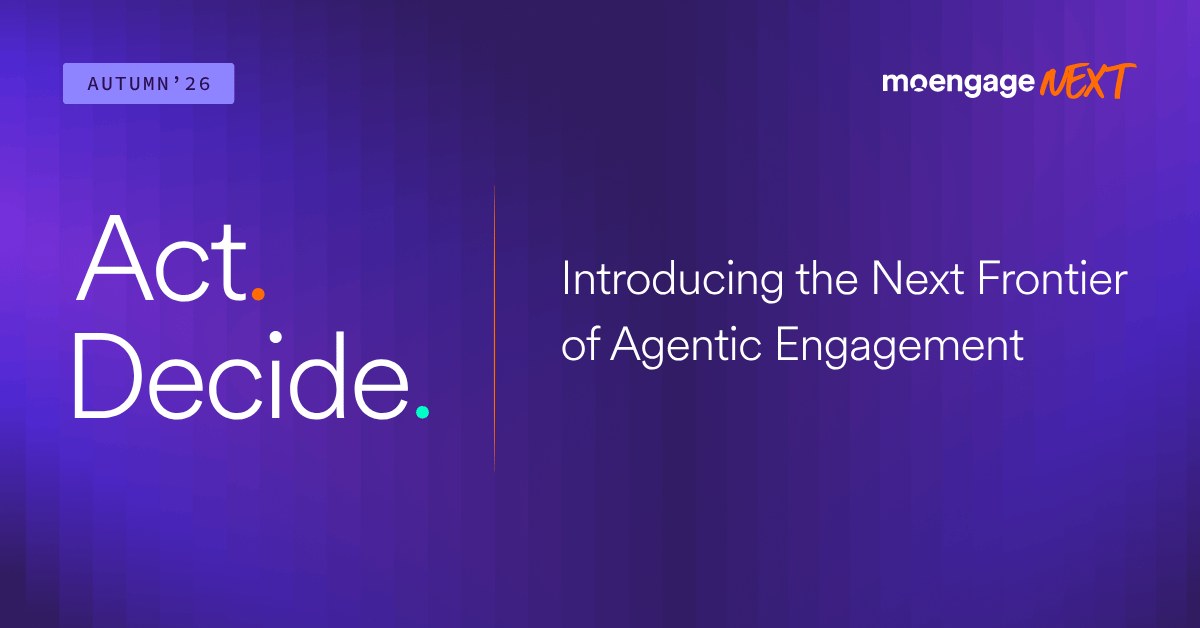
At its NEXT Autumn '26 event, MoEngage built Aampe's decisioning technology, acquired in June, into its product. The AI picks content, channel and timing for each customer. What was announced, what it changes for measurement, and the two comparison groups brands should keep.
In this articleShow all sectionsHide
30-second summary
ShowHide ⌄
- On 30 October 2026, MoEngage presented its NEXT Autumn '26 releases. The headline: the decisioning technology of Aampe, a start-up acquired in June, is now fully integrated into the product.
- Their line: "Agents act. Decisioning decides." Agents carry out tasks; the decisioning layer picks content, channel and timing for each person.
- The AI learns customer by customer, with every interaction. The team sets goals and limits, such as frequency caps.
- When every customer gets a different message, the campaign A/B test no longer makes sense. The question becomes: does the AI beat our current rules, and does it beat sending nothing?
- On the brand side, keep two comparison groups: a permanent holdout and a "current rules" group. And track unsubscribes as closely as purchases.
Section 1 · The announcement
"Agents act. Decisioning decides.": Aampe's decisioning AI joins MoEngage
MoEngage, a customer engagement platform (email, push notifications, SMS, in-app messages), presented its NEXT Autumn '26 releases on 30 October 2026, in a post by its co-founder and CEO, Raviteja Dodda.
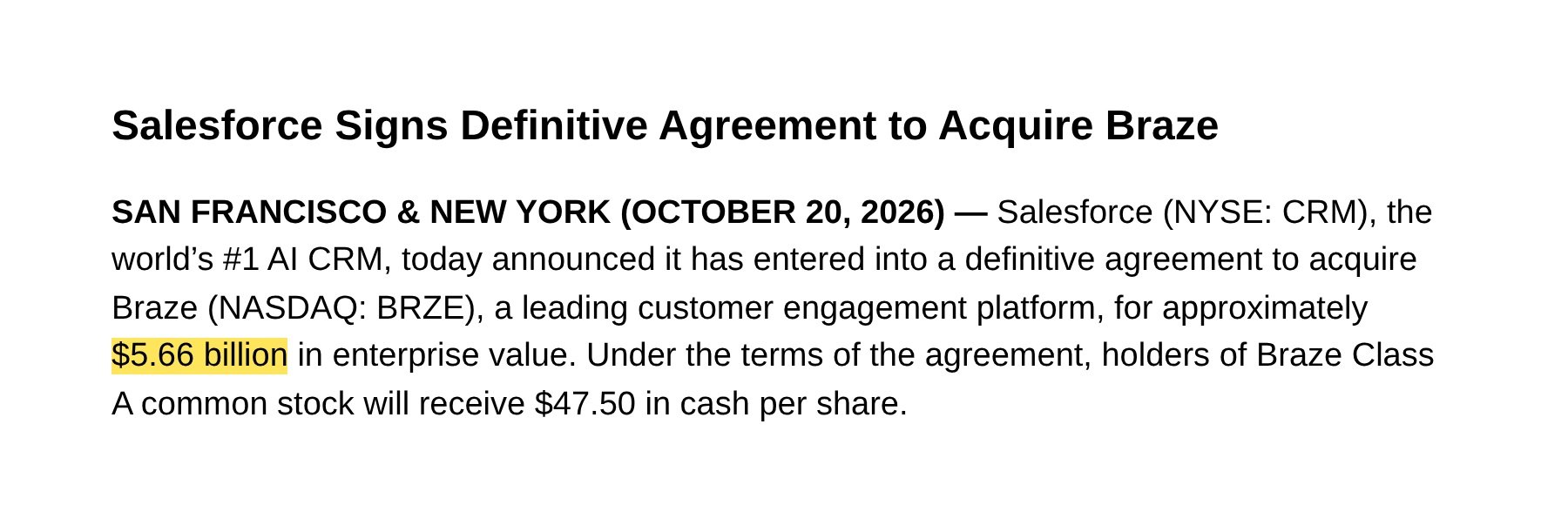
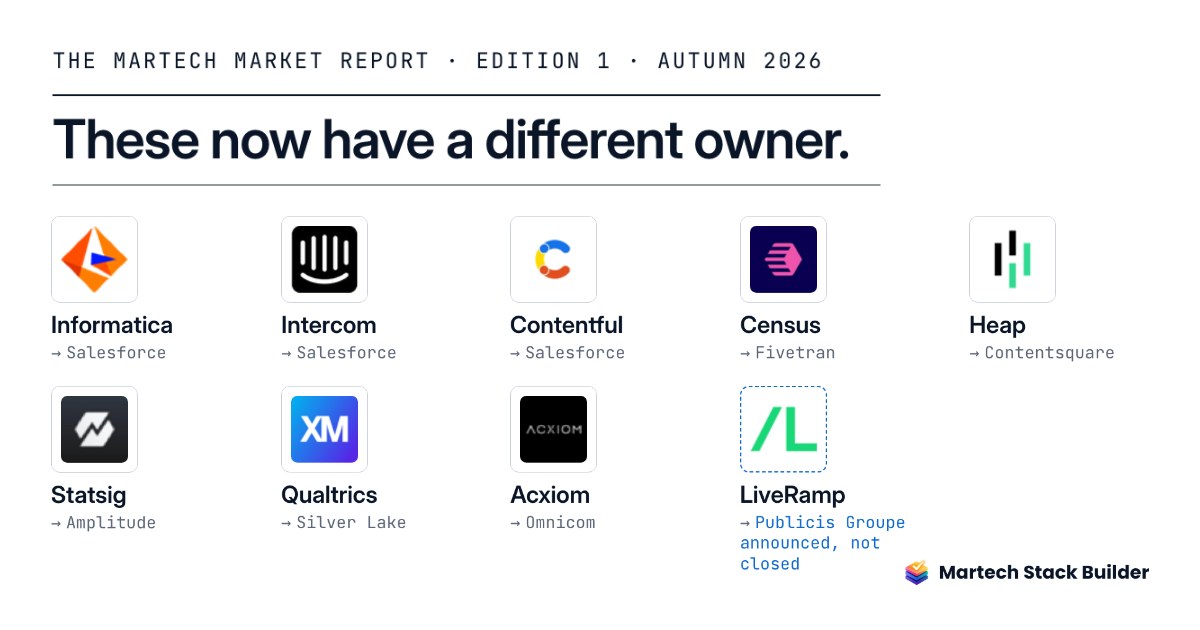
The headline is Aampe, a San Francisco start-up founded in 2020 that MoEngage acquired in June 2026. Deal terms were not disclosed. Its decisioning technology is now fully integrated into MoEngage, and Aampe's founding team leads this area.
MoEngage sums up the split of roles in one line: "Agents act. Decisioning decides." AI agents carry out tasks (analysing, drafting, auditing). The decisioning layer chooses what each customer receives.
Agent versus decisioning An AI agent performs a task it is given: produce a report, draft a campaign, check a configuration. A decisioning AI makes the call instead of the team: for this specific customer, which message, on which channel, at what time. It is this second piece that changes how you measure.
Section 2 · How it works
From segment to customer: the AI picks content, channel and timing, person by person
MoEngage's starting point: segment-based marketing targets an "average" customer who does not exist. The post names three obstacles: thinking in segments, learnings that reset with every campaign, and calendars driving decisions.
- 1Business context, set by the teamGoals, content strategy, positive and negative signals, and limits such as frequency caps.
- 2Customer context, learned by the AIPreferences, past responses, and the channels and times that work for each person.
- 3The decision, made by the AIContent, channel and timing, chosen customer by customer. The AI learns from every outcome.
The CRM team's job changes. MoEngage describes it as a shift from "segment, build, schedule" to "strategize and assign". According to the acquisition release, Aampe's technology relies on reinforcement learning (multi-armed bandit algorithms) and on causal inference at the level of each individual.
The release also includes the Merlin Agent Harness, a shared workspace for marketing teams and AI agents (agent builder, MCP tools, connectors, governance rules), a global agent that proactively flags metric drops, and new data and channel features.
Section 3 · Measurement
When every customer gets a different message, the campaign A/B test goes away
Until now, a CRM team tested campaigns: subject line A against subject line B, a 9 am send against a 6 pm send. The two versions went to two halves of the base, and you compared.
With a decisioning AI, there are no longer two versions but as many journeys as customers. Comparing one subject line to another stops making sense. The question becomes: does the AI beat our current rules? And does it beat sending nothing at all?
MoEngage announces causal measurement, crediting outcomes to the messages that drove them rather than to what would have happened anyway. That is the right instinct: a loyal customer would often have bought without the reminder they received.
Causal measurement, in plain terms Causal measurement looks for the message's own effect: the difference between what the customer did after receiving it and what they would have done without it. The only simple way to estimate it across a programme is to keep a randomly drawn share of customers who do not get the treatment.
The Aampe acquisition release itself quotes a customer, the tax app Taxfix, measuring its results against a global holdout. That is exactly the benchmark a brand should keep in house, independently of the measurement the tool provides.
Section 4 · Two benchmarks
Two comparison groups to keep on the brand side
The vendor's measurement is useful, but it is the tool grading itself. To keep an independent view, we recommend two groups, randomly drawn and stable over time:
| Group | What it receives | What it measures |
|---|---|---|
| Permanent holdout | No marketing messages | The CRM's truly incremental revenue |
| "Current rules" group | Today's campaigns and journeys | The AI's gain over what it replaces |
- Size: large enough to detect a meaningful gap in revenue per customer. A few percent of the base is often enough on a large base; more on a small one.
- Duration: several months. An AI that learns customer by customer is judged over time, not over a week.
- Metric: revenue per customer across the whole group, not revenue per opened or clicked message.
“The first question before switching on automated decisions: what will we compare them against?”
Section 5 · Unsubscribes
Track unsubscribes as closely as purchases
An AI rewarded on clicks quickly learns to send more. In the short term, sales go up. In the medium term, part of the base unsubscribes, marks messages as spam or turns off notifications, and that audience does not come back.
- Define negative signals from the start: unsubscribes, spam complaints, notifications turned off, app uninstalls.
- Set frequency caps per channel and per customer, in the tool.
- Track the share of the base still reachable each month, by channel, in the AI group and in both comparison groups.
- Revisit the goals given to the AI if the reachable base shrinks faster than in the "current rules" group.
Section 6 · Where to start
Where to start before switching on a decisioning AI
- 1Measure where you standRevenue per customer, reachable share of the base, unsubscribes by channel: your baseline before any change.
- 2Set up the two comparison groupsRandomly drawn, excluded from the AI, kept for several months.
- 3Write the business contextGoals, negative signals, frequency caps, allowed content: this is what the AI will optimise for.
- 4Start with a narrow scopeOne journey or one channel first, then widen once the gap against both groups is measured.
Key terms
ShowHide ⌄
- Decisioning AI
- An AI that chooses, for each customer, the message, channel and send time, within limits set by the team.
- AI agent
- A program that carries out a task it is given (analysis, drafting, checks), using tools and data.
- Holdout group
- A randomly drawn share of customers who do not receive the treatment being studied. It serves as the baseline for measuring the real effect.
- Causal measurement
- Measurement that isolates the effect of an action by comparing it with what would have happened without it.
- Frequency cap
- The maximum number of messages a customer can receive over a period, per channel or across all channels.
Sources
ShowHide ⌄
Alexandre co-founded and runs Henkan & Partners. He decodes one e-commerce story every day on LinkedIn.
Follow Alexandre ↗