In one year, the visitor coming from AI went from worth less than half a visit to nearly double: what it says, and what it doesn't
 Alexandre Suon·7 min read·
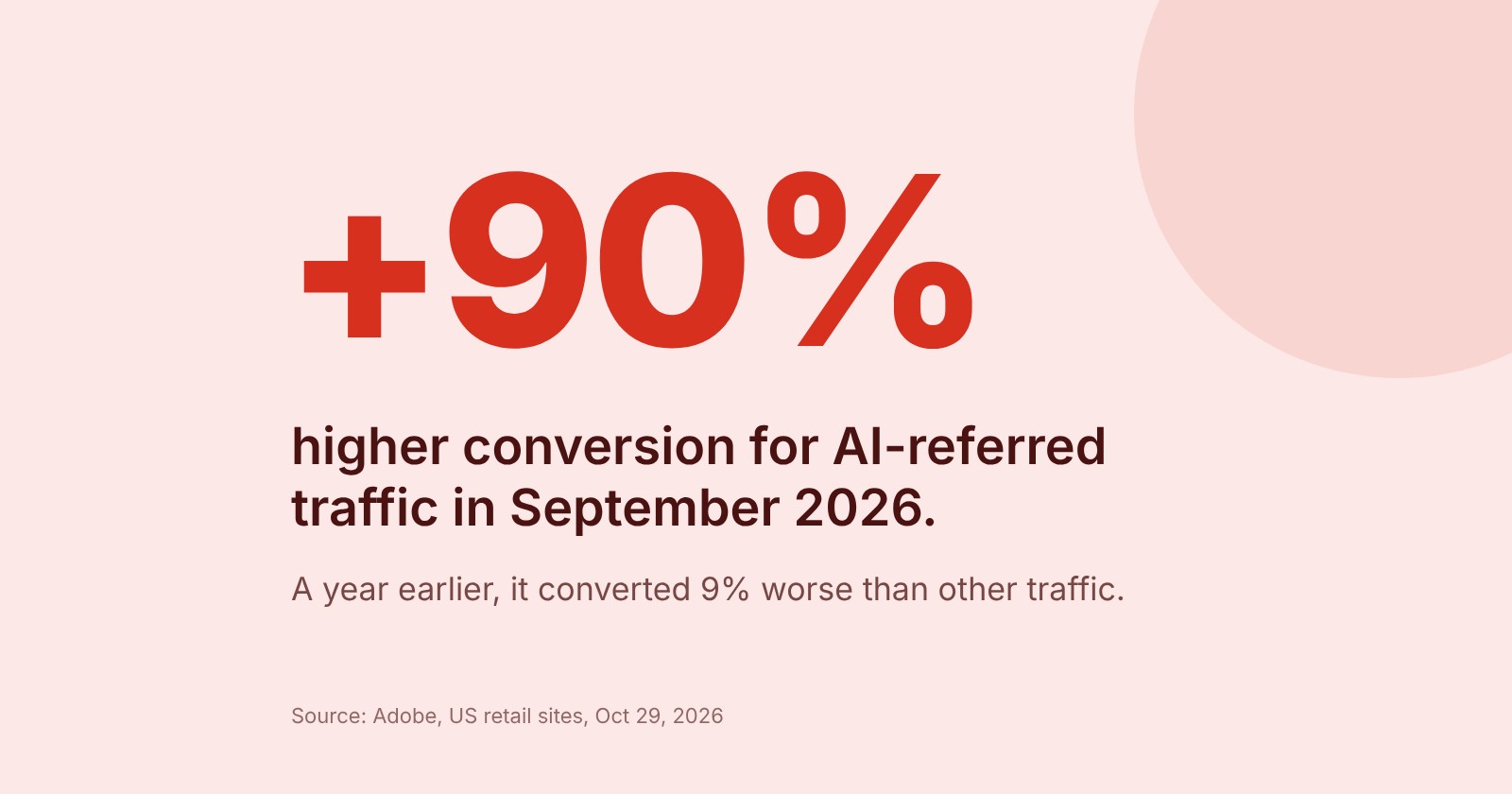
According to Adobe, which tracks more than 1 trillion visits to US retail sites, traffic from AI assistants converted 9% worse than the rest in August 2025. In September 2026 it converts 90% better and generates 83% more revenue per visit. What these figures measure, how much of it is selection, and why this visitor belongs at the top of 2027 test plans.
In this articleShow all sectionsHide
30-second summary
ShowHide ⌄
- On 29 October 2026, Adobe published its update on traffic from AI assistants (ChatGPT, Gemini, Perplexity…) to US retail sites, based on more than 1 trillion visits.
- In August 2025 this traffic converted 9% worse than the rest. In September 2026 it converts 90% better, the highest level Adobe has observed, and earns 83% more revenue per visit.
- These visitors stay 73% longer, view 25% more pages and add to cart 53% more often. Volume grew 71% year on year.
- Part of the gap comes from who these visitors are: they compared before clicking and arrive ready to buy. The figure does not measure AI's effect on a brand's sales.
- It does show where conversion is decided: on the product page, where this visitor lands with a single question. That is the page to put at the top of 2027 test plans.
Section 1 · The figures
From 9% worse to 90% better: the turnaround Adobe measured in one year
Since October 2024, Adobe has tracked traffic that reaches US retail sites from an AI assistant, meaning a click on a link the assistant offers. Its study published on 29 October 2026 draws on more than 1 trillion visits, 100 million SKUs and 18 categories, plus a survey of more than 5,000 US consumers.
The most striking result is about conversion. In August 2025, AI traffic converted 9% worse than the rest. In September 2026, it converts 90% better, the highest level Adobe has observed. Revenue per visit follows: +83% versus other visits, the largest gap of the year.
| Month | AI traffic conversion | Adobe's comment |
|---|---|---|
| August 2025 | 9% worse than the rest | — |
| September 2026 | 90% better than the rest | Highest level observed to date |
Adobe sums up the shift: in twelve months, this visitor went from being worth less than half of a typical visit to nearly twice as much.
Section 2 · Behaviour
Longer visits, more pages, more add-to-carts
The gap is not limited to conversion. In September 2026, compared with other visitors, those arriving from AI engage more at every step.
Volume is rising too: +71% year on year in September 2026. Adobe forecasts growth of 159% on Thanksgiving, 95% on Black Friday and 88% on Cyber Monday, and expects the revenue-per-visit advantage to double over the holidays.
What Adobe calls "AI traffic" A visit that reaches a retail site after a click on a link in an AI assistant. Purchases made entirely inside the assistant, without visiting the site, are not in these figures: these are visitors who actually land on the brand's site.
Section 3 · The caveat
These visitors arrive ready to buy: the figure describes an audience, not AI's effect
Before getting carried away, a caveat. A visitor clicking from an assistant has often done the work elsewhere: described the need, compared several products, read a summary of reviews. When they arrive, they are further along in their purchase than the average visitor.
| Reading | What it assumes | What it would take to confirm it |
|---|---|---|
| AI makes people convert more | Going through the assistant creates sales that would not have happened | A test, with and without exposure to the assistant |
| The audience is different | These are more decided buyers, who would largely have converted anyway | A comparison with other visitors at the same purchase stage |
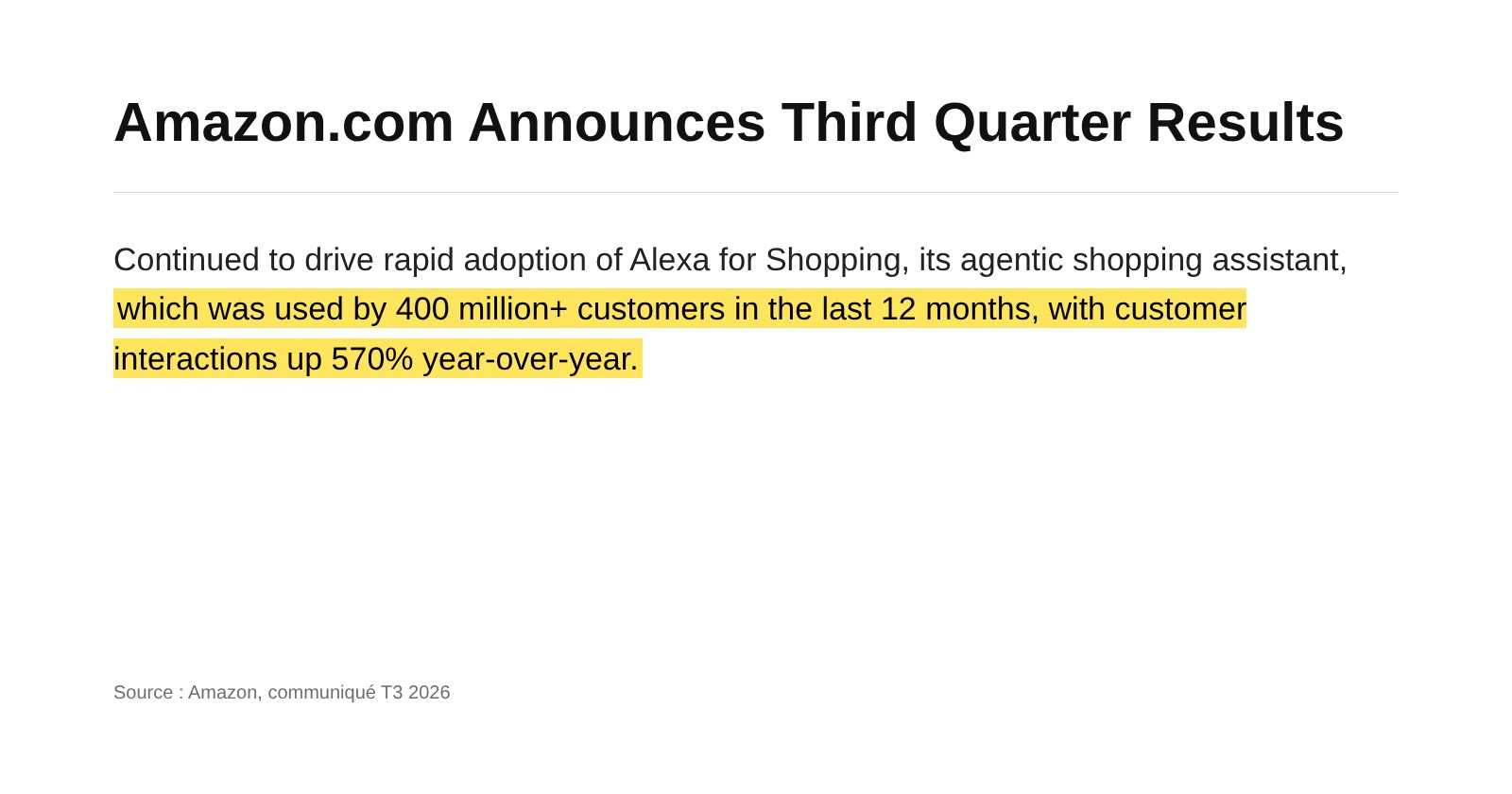
Both readings can be true at once, and Adobe's figure cannot tell them apart. It is the same trap as the figure Amazon gave when presenting its results on 29 October, that users of its shopping assistant spend more per order: comparing two audiences does not measure a tool's effect.
“This visitor converts better first because they arrive ready to buy. The useful question is what they find when they land.”
Section 4 · The landing page
They skip the homepage and categories: the product page becomes the entry page
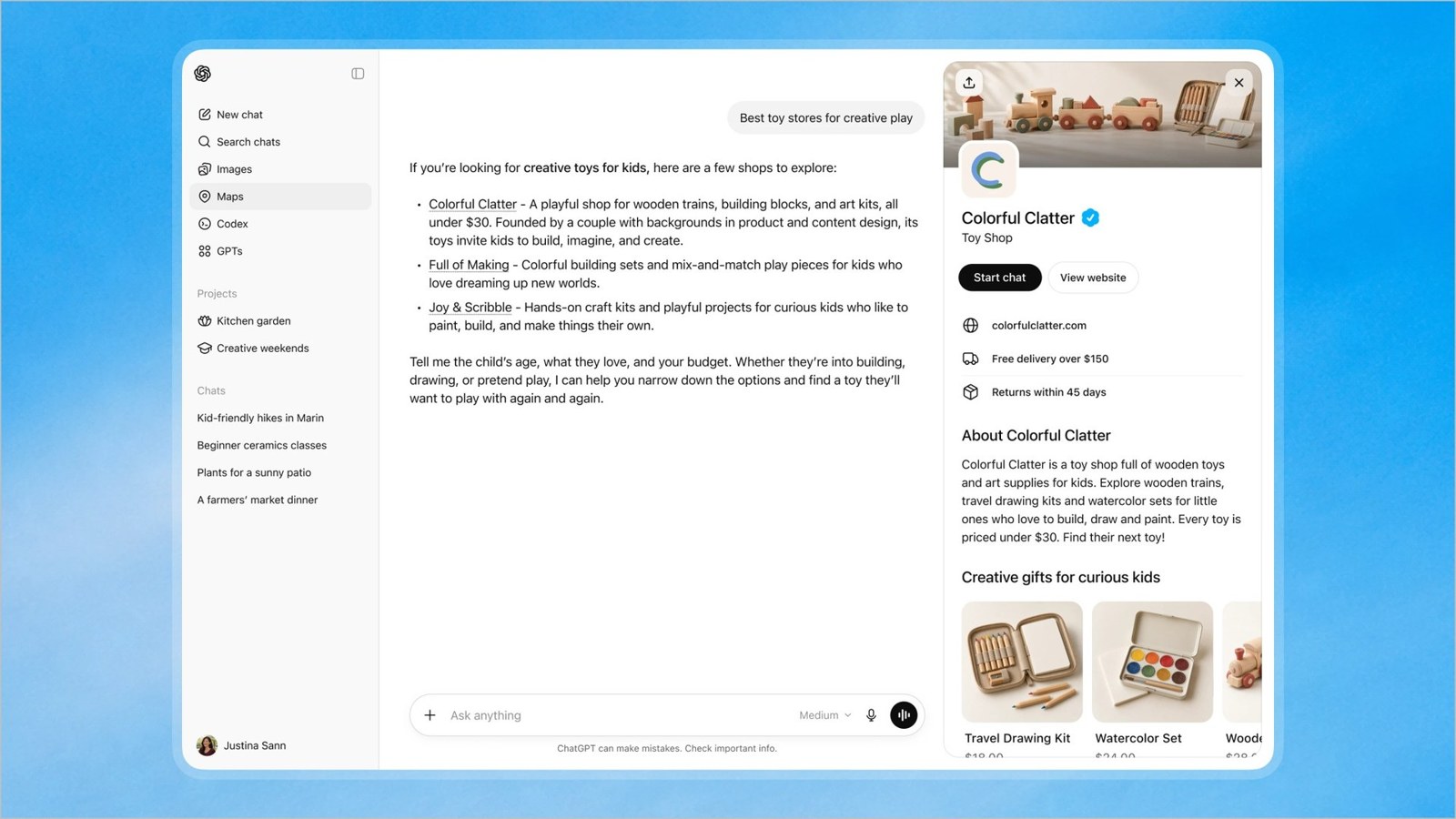
For fifteen years, sites were optimised for a visitor who discovers: homepage, categories, filters, comparison. The visitor arriving from AI did that exploring inside the assistant. They usually land straight on a product page, with one question: is this really the product I was told about?
- Price and availability must match what the assistant said, or trust drops.
- Delivery time and return terms must be visible without scrolling.
- The attributes the assistant quoted (size, material, compatibility) must appear on the page as they are.
- The path to the cart must be short: this visitor does not need to be sent back to categories.
Readable by AI, readable by a visitor Adobe also measures how easily assistants can read and cite retailers' pages. In September 2026, the average US retail homepage scores 63%, with wide gaps: 79% in electronics, 40% for general merchandise homepages. A page that is clear for the assistant is often clear for the visitor it sends.
Section 5 · 2027 tests
Put this visitor at the top of 2027 test plans
The speed of the change is the real lesson: twelve months for this visitor to change value completely. 2027 test plans are being drawn up now; they should take it into account.
- 1Isolate this traffic in analyticsCreate a dedicated channel for AI referrers. Part of this traffic often gets lost in "direct".
- 2Find its landing pagesList the product pages most visited from AI and their conversion rate.
- 3Compare with what assistants sayAsk assistants your customers' questions and check that price, stock and attributes match the page.
- 4Test these pages firstKey information at the top, answers to frequent questions, path to cart, measured on revenue per visitor.
Key terms
ShowHide ⌄
- AI traffic
- Visits that reach a site after a click on a link offered by an AI assistant (ChatGPT, Gemini, Perplexity…).
- Conversion rate
- The share of visits that end in a purchase.
- Revenue per visit
- Revenue divided by the number of visits. It combines conversion and average order value.
- Selection bias
- A gap caused by who is in the groups being compared (here, more decided visitors) rather than by the effect being studied.
- Landing page
- The first page seen in a visit. For AI traffic, it is often a product page.
Sources
ShowHide ⌄
Alexandre co-founded and runs Henkan & Partners. He decodes one e-commerce story every day on LinkedIn.
Follow Alexandre ↗