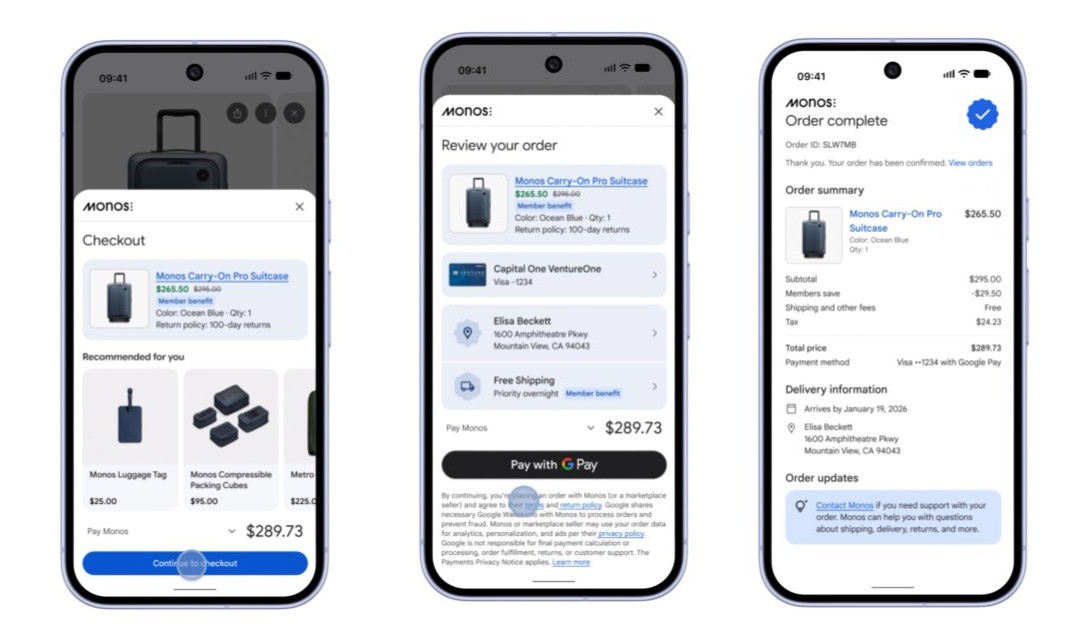
Ahead of Black Friday, Google's cart tracks prices and surfaces promo codes: what it changes for your promotions
 Alexandre Suon·9 min read·
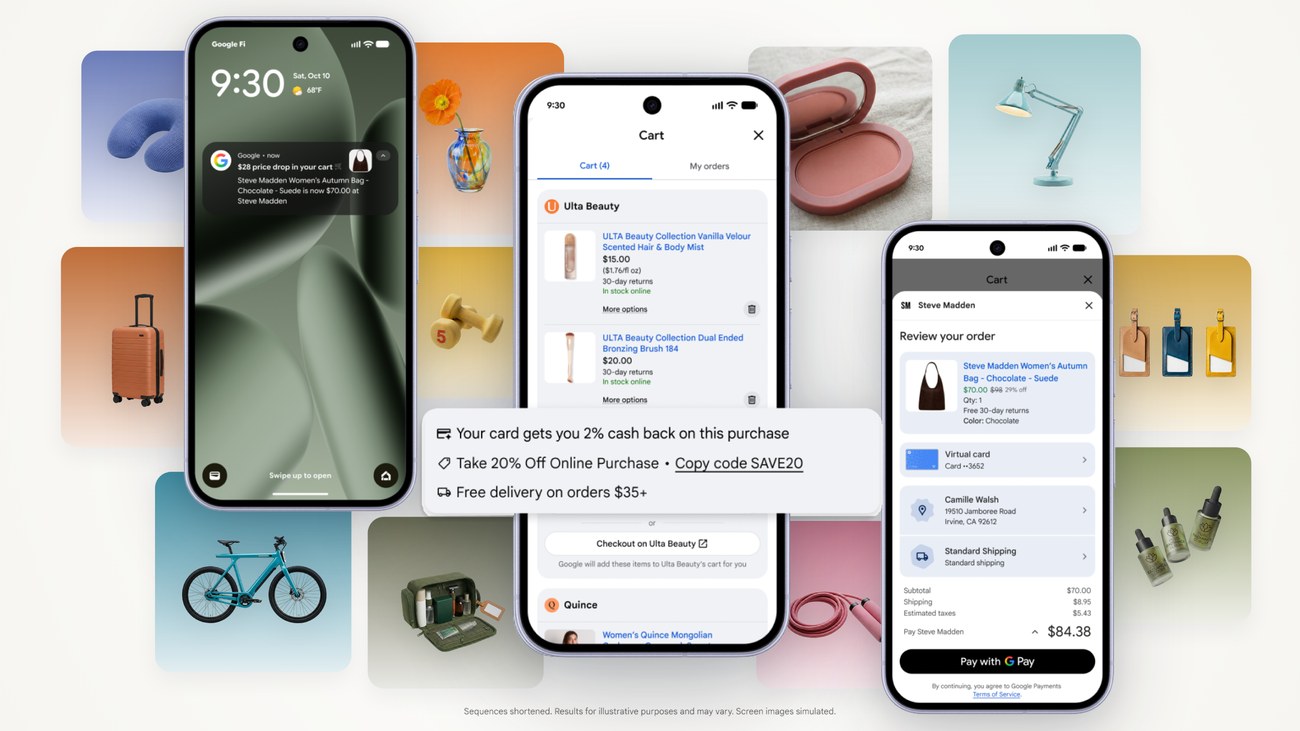
Launched in mid-October in the US across Search and Gemini, Google's Universal Cart gathers products from several merchants, alerts shoppers to price drops and shows promo codes in the cart. What it changes for your pricing, your codes and your margin, and what to prepare.
In this articleShow all sectionsHide
30-second summary
ShowHide ⌄
- Google began rolling out Universal Cart in the US on October 15, 2026, in Search and the Gemini app.
- The cart holds products from several merchants, alerts shoppers when a price drops or an item is back in stock, and shows relevant promo codes.
- Adobe forecasts generative-AI traffic to US retail sites up 130% over the holiday season, and up 159% on Thanksgiving Day.
- Working assumption for this Black Friday: any public promo code can be found and offered to the shopper at checkout.
- A truly reserved code has to be unique and tied to a customer in the CRM, and you should track the share of orders placed with a code the buyer never received.
Section 1 · The news
One cart for several merchants, watching prices on the shopper's behalf
Google's Universal Cart began reaching US users on October 15, 2026, in Google Search and the Gemini app. It was first previewed at Google I/O on May 19. YouTube and Gmail are not part of this first launch.
The idea: shoppers save products from several stores and they stay in a single cart, wherever they were found. Google names Nike, Sephora, Target, Ulta Beauty, Walmart, Wayfair and "many Shopify merchants" among participating retailers. The merchant remains the seller of record.
Three features matter here. The cart sends a notification when a saved item drops in price or comes back in stock. It shows relevant promo codes right in the cart. And Google Wallet reads the perks on the shopper's cards to help pick a payment method.
Section 2 · How it works
From saving an item to checkout, the assistant does the comparison work
- 1SaveThe shopper adds products from several merchants from Search or Gemini. They stay in the same cart.
- 2WatchUsing Google's Shopping Graph data, the cart alerts the shopper when a price drops or an item is back in stock.
- 3Offer a codeThe cart shows promo codes it considers relevant for the order. Google does not say where these codes come from.
- 4PayThe shopper pays with Google Pay in the cart, or the items are transferred to the merchant's own cart.
What is the Universal Commerce Protocol? It is the protocol that connects Google's assistants to merchants. It lets the shopper either pay directly in Google's cart or have the items transferred to the merchant's cart. In Merchant Center, eligible merchants choose between cart transfer, native checkout and customer identity linking.
Several points are not published yet: any fees, how merchants and codes are ranked, whether there is paid placement, what data is shared and how sales are attributed. The launch post does not describe a way for merchants to opt out of code display either.
Section 3 · Timing
The cart arrives just before the peak in AI-referred traffic
Adobe forecasts $275.1 billion in US online sales between November 1 and December 31, up 6.7%. Black Friday would reach $12.9 billion and Cyber Monday a record $15.1 billion. But the figure that matters here is traffic coming from AI assistants.
These are forecasts, and they measure traffic, not sales. They point to one thing: this year, some shoppers will reach your site after an assistant has already compared offers, tracked the price and looked for a discount.
Section 4 · Promo codes
Treat any public code as known to everyone
For years, many retailers built "reserved" offers: the newsletter subscriber code, the loyalty code, the influencer code. These codes already leaked to deal sites and browser extensions.
What changes with an assistant that offers codes at checkout is that shoppers no longer even have to look for them. Google does not explain how it picks the codes it shows. So the prudent assumption for this Black Friday is simple: any shared, reusable code can end up in anyone's cart.
“A code anyone can type is not a customer perk. It is a price cut.”
Shared code or unique code? A shared code ("SAVE20") works for anyone who knows it. A unique code is valid once, or only for one customer account. When it is tied to a customer in the CRM, you know who received it, and a code found elsewhere does not work.
Section 5 · Margin and measurement
Measure the share of discounts given to shoppers who were never meant to get them
| Code type | Risk with an assistant | What you can do |
|---|---|---|
| Public campaign code | Offered to everyone, including shoppers who would have paid full price | Treat it as a price cut and budget it as one |
| Shared newsletter code | Leaks beyond subscribers | Move to one unique code per subscriber |
| Loyalty code | Used by non-members | Tie the perk to the customer account rather than a code |
| Influencer code | Reused outside the target audience, attribution skewed | Short validity, usage caps, tracking per code |
| Win-back code | Picked up by active customers | Unique code, sent and checked from the CRM |
The metric to track is easy to state: the share of orders placed with a code the buyer never received. To compute it, you need to know who each code was sent to and compare that with the customer who used it. In many teams, nobody looks at this number.
Also track, by traffic source, the share of orders with a code and the average discount. If assistant-referred visits convert well but almost always with a code, the real margin of that channel is not what revenue suggests.
Section 6 · What to prepare
Before the peak, audit your codes and test what the assistant sees
- List every active code: public, newsletter, loyalty, influencers, customer service, partners. Close the ones that no longer have a reason to exist.
- Decide, for each code, whether it is public or reserved. A public code is budgeted as a price cut across all traffic.
- Make truly reserved codes unique, tied to a customer in the CRM, single-use or capped.
- Set up the metric "orders with a code never received" before the peak, so you have a baseline.
- Check your Merchant Center setup if you sell in the US: product feed, prices, stock and chosen checkout mode.
- Test it yourself: save your products to the cart from Search or Gemini in the US, and note which prices and codes appear.
- Compare margin by traffic source over the period, not just revenue.
Key terms
ShowHide ⌄
- Universal Cart
- Google's cart that holds products from several merchants in Search and Gemini, tracks prices and shows promo codes.
- Universal Commerce Protocol (UCP)
- Protocol connecting Google's assistants to merchants, to transfer a cart or pay directly.
- Shopping Graph
- Google's product database (prices, stock, merchants) that the cart relies on.
- Unique code
- A promo code valid once or for a single customer, which can be linked to the person who received it.
- Code leakage
- Use of a reserved code by shoppers outside the intended audience, often via deal sites.
Sources
ShowHide ⌄
Alexandre co-founded and runs Henkan & Partners. He decodes one e-commerce story every day on LinkedIn.
Follow Alexandre ↗