When an AI agent shops, the brand site comes last: what the PYMNTS study says, and what to change
 Alexandre Suon·10 min read·
Same product, same price, same shipping: 40.2% of US consumers would send their AI assistant to buy on a large marketplace, only 16.1% on the brand's own site. What the study says, what Walmart just opened to agents, and why sales terms, not the storefront, will win the shopper back.
In this articleShow all sectionsHide
30-second summary
ShowHide ⌄
- PYMNTS Intelligence surveyed 2,191 US consumers in August 2026 about AI-assisted shopping.
- With everything equal, 40.2% would send their AI assistant to a large marketplace, and only 16.1% to the brand's own site.
- What would bring them back to the brand: a lower price or exclusive offer (53.9%), free shipping as fast (49.9%), equally easy returns (35.2%).
- On October 21, 2026, Walmart opened a dedicated entry point for AI agents in beta, with strict terms of use.
- An agent compares terms, not storefronts: price, shipping, returns and stock must be readable and tested on the product page.
Section 1 · The study
Four consumers in ten would send their AI agent to a marketplace
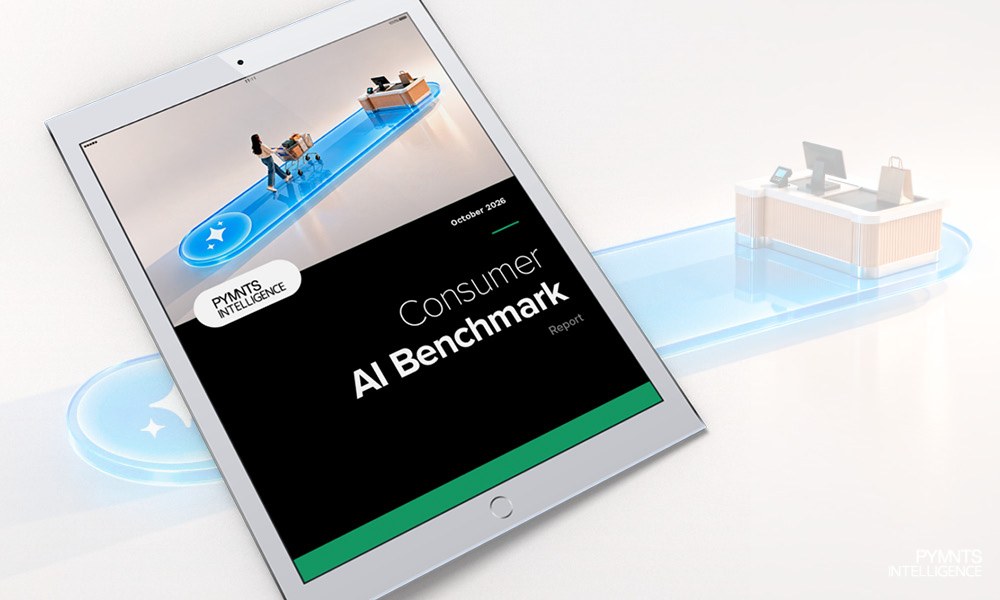
PYMNTS Intelligence, the research arm of the US payments media outlet, publishes a monthly benchmark on how consumers use AI. The October 2026 edition is based on a survey run August 10–13, 2026 among 2,191 US consumers, weighted to represent the country's adult population.
One question sums it up. Imagine your AI assistant buys an item for you at the same price, with the same shipping and the same returns everywhere. Where do you want it to buy?
Why “all else equal” matters so much The question neutralizes price, shipping and returns. What remains is the spontaneous preference for a place to buy. And in that tie, the brand site comes last, behind an option that amounts to letting the AI decide.
Section 2 · Habits
AI-assisted purchases already flow mostly to the big platforms
The survey doesn't only measure intent. It also asks where the most recent AI-assisted purchase happened. For 59.7% of respondents, it was Amazon. Big-box and department stores follow with 19.5%. Brand sites or apps account for only 6.3%.
Why those places? Respondents first cite the best price or a discount (27.5%), then free or fast shipping (17.3%), trust in payment (9.1%) and habit (8.1%). A direct link from the AI tool is cited by only 2.5%.
Yet AI is already moving some purchases. 44.7% of respondents say it led them to buy from online stores they had never used, and 39.9% that it changed where they buy. The door is open for brands, provided they pass the filter.
Section 3 · What wins them back
Price, shipping, returns: nothing about design, nothing about the homepage
PYMNTS then asked what would make these shoppers choose the brand's site over a marketplace. Every answer is a sales term.
None of these reasons is about the site's look and feel. An agent doesn't see a banner or a carousel. It reads a product page and compares a price, a delivery time, a return policy, a stock level. If the information is vague, contradictory or buried in the terms and conditions, it moves on to the next merchant.
“An AI agent doesn't compare storefronts. It compares terms.”
Section 4 · Walmart
Walmart opens a dedicated entry point for agents, with rules
On October 21, 2026, Walmart announced three building blocks to let AI agents shop on behalf of its customers while keeping the customer in control.
- 1Agent Gateway, in betaA dedicated entry point for agents, through the MCP protocol, to search and buy more reliably. Open in beta to companies and developers.
- 2Agent Profiles, within a monthEach agent gets its own profile in the customer's account. Its purchases are kept separate, with approval for every purchase or a spending limit.
- 3Terms of use for agentsCustomer approval by default, no access to payment card data, nothing beyond the customer's intent. An agent that breaks the rules is blocked.
Walmart specifies that agents see the same prices as human customers, with offers and fees shown before purchase. In other words, big retail is getting its terms ready to be read by machines.
What is MCP? The Model Context Protocol is an open standard that lets an AI agent plug into a service (a catalog, a cart, a tool) and use it in a structured way, without having to “read” web pages like a human.
Section 5 · To do
Make your terms readable before polishing the storefront
For a brand, the takeaway is not to run away from marketplaces. It is to treat sales terms as a product in their own right, readable by a human and by an agent, and tested.
- Price and offers: are the final price, discounts and site-only perks visible on the product page, without a click or a login?
- Shipping: are delivery time and cost shown clearly at product level, and as competitive as on the marketplaces you sell on?
- Returns: does the policy fit in one clear sentence on the product page, rather than in the terms and conditions?
- Stock: is availability accurate and readable in the page code, not only in an image?
- Structured data: are price, availability and shipping described in the page markup that machines can read?
- Tests: test these elements like the rest of the site. Showing the delivery time or return policy higher on the product page is a simple A/B test to launch.
A caveat on these numbers This is a US survey, weighted but self-reported, about a situation that is still partly hypothetical. It doesn't predict your traffic. The ranking and the weight of sales terms, however, are signals to take seriously.
Key terms
ShowHide ⌄
- AI shopping agent
- An AI assistant the customer trusts with a search or a purchase, which compares offers and places the order on their behalf, with or without approval.
- Marketplace
- A platform where many sellers list their products, with a shared cart and checkout.
- MCP (Model Context Protocol)
- An open standard that lets an AI agent connect to a service and use its functions in a structured way.
- Structured data
- Markup added to a page's code to describe a product, its price or availability precisely to search engines and machines.
- Weighting
- A correction applied to a survey so the sample reflects the target population (age, gender, income, region).
Sources
ShowHide ⌄
Alexandre co-founded and runs Henkan & Partners. He decodes one e-commerce story every day on LinkedIn.
Follow Alexandre ↗